Motors in Electric Cars and Tesla Vehicles
Electric vehicles (EVs) rely on various types of motors to convert electrical energy into mechanical energy, thereby powering the vehicle’s movement. The three dominant types of motors in electric vehicles are direct current (DC) motors, alternating current (AC) motors, and permanent magnet synchronous motors (PMSMs). Understanding these motors is crucial for comprehending their efficiencies and performance characteristics that influence the overall energy effectiveness of an EV.
DC motors, while simpler in design, offer variable speed control and good torque characteristics at lower speeds. These motors operate using a direct current supply, which makes them straightforward to control but often results in a hefty weight due to their mechanical commutation components. Although DC motors are primarily used in older electric vehicle models, their design has been overshadowed by more advanced alternatives in recent years.
On the other hand, AC motors have gained popularity due to their efficiency and performance capabilities. They operate using alternating current, producing a rotating magnetic field that generates the necessary torque. The two main types of AC motors used in electric vehicles are induction motors and synchronous motors. Induction motors are known for their simplicity and ruggedness, while synchronous motors, particularly those employing permanent magnets, offer higher efficiency and better torque characteristics over a wider range of speeds.
PMSMs stand out for their high efficiency and compact design. These motors utilize permanent magnets embedded in the rotor to create a constant magnetic field, allowing for superior torque production and energy efficiency. Their performance is typically enhanced due to better thermal management, which leads to a lower environmental impact. Understanding how each type of motor functions and its contributions is pivotal in assessing the performance, efficiency, and operational excellence of electric vehicles, particularly those manufactured by renowned companies like Tesla.
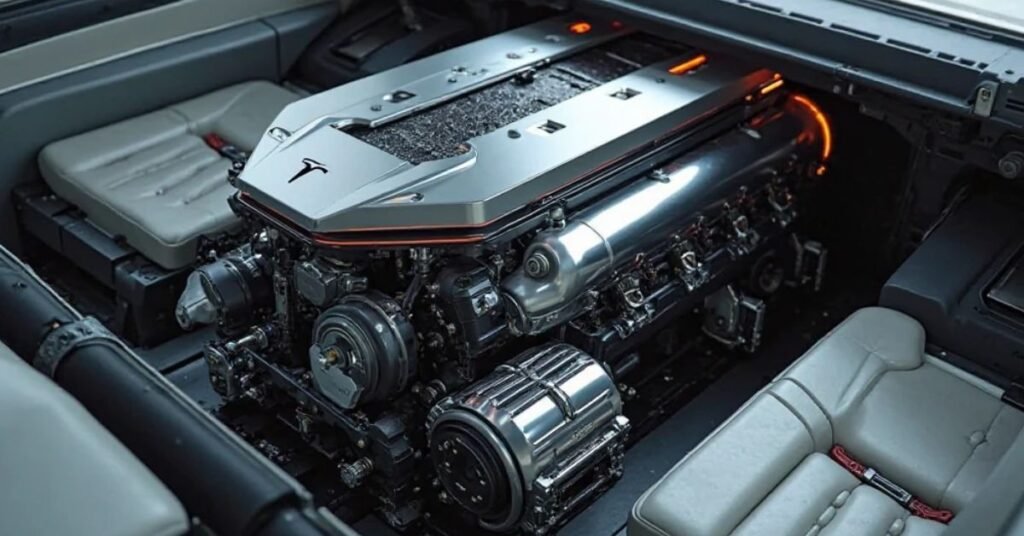
The Role of Tesla’s Unique Motor Technology
Tesla has established itself as a pioneer in electric vehicle technology, particularly through its innovative approach to motor design. Central to this success are Tesla’s electric motors, which predominantly include induction motors and Permanent Magnet Synchronous Motors (PMSMs). The incorporation of these two distinct motor types allows Tesla to leverage the strengths of each, optimizing performance and efficiency in varying driving scenarios. Induction motors, known for their robustness and reliability, offer effective performance across a wide range of speeds, making them ideal for standard driving conditions. Meanwhile, PMSMs are exceptionally efficient at lower speeds and provide extraordinary torque, which enhances acceleration significantly. This combination results in an unparalleled driving experience that characterizes Tesla vehicles.
In addition to hardware innovations, Tesla emphasizes the critical role of software integration in motor performance. The unique software architecture allows for real-time adjustments to power output and efficiency. For instance, Tesla vehicles utilize advanced algorithms that manage power distribution between the motors effectively, ensuring optimal performance under different driving conditions. This software integration helps not only in boosting the acceleration capabilities of the vehicle but also in enhancing energy management. The ability to optimize the motor’s performance dynamically contributes to extending the vehicle’s range, a key consideration for electric vehicle users.
The impact of Tesla’s unique motor technology on the overall driving experience cannot be overstated. The seamless acceleration provided by these motors allows drivers to enjoy a responsive, exhilarating experience, setting Tesla vehicles apart from many competitors. The perfect synergy between hardware innovation and sophisticated software enables Tesla to push the boundaries of electric vehicle performance, thereby solidifying its position at the forefront of the automotive industry. As this technology continues to evolve, it will undoubtedly play a pivotal role in shaping the future of electric driving.
Comparing Tesla Motors with Other EV Manufacturers
As the electric vehicle (EV) market continues to grow, understanding the nuances of motor technology becomes paramount for consumers and industry experts alike. Tesla has emerged as a key player, known for its innovative motor technology that often sets it apart from traditional automotive manufacturers such as Nissan, Chevrolet, and Ford. When comparing Tesla Motors with other EV manufacturers, several critical aspects come into play, including power density, efficiency ratings, and performance metrics.
Power density, a crucial factor in electric motor design, refers to the amount of power that can be generated in relation to the size and weight of the motor. Tesla has consistently demonstrated a higher power density in its motors compared to competitors. For example, Tesla’s permanent magnet synchronous motors offer superior torque delivery, which translates into improved acceleration performance. In contrast, many of its competitors still utilize induction motors that generally exhibit lower power density and hence, less responsive acceleration capabilities.
Another essential metric is efficiency rating, which measures how well an electric motor converts electrical energy into mechanical energy. Tesla’s proprietary engineering has led to remarkable efficiency ratings, often surpassing those of other EV manufacturers. For instance, while Chevrolet’s Bolt EV offers solid efficiency, it does not match Tesla’s models, which boast impressive WLTP and EPA ratings due to their advanced thermal management systems and optimized motor designs.
Performance metrics, including 0-60 mph times, also highlight Tesla’s advantage. Many Tesla vehicles can achieve remarkable speeds in a fraction of the time compared to their rivals. This performance edge is attributed to Tesla’s commitment to continuous innovation and refinement of their motor technology, establishing a benchmark that other manufacturers strive to meet. Through a careful analysis of these factors, it becomes evident that Tesla remains a leading force in the electric vehicle landscape, leveraging superior motor technology to maintain its competitive edge.
The Future of Electric Motors in the Automotive Industry
The automotive industry is currently at the precipice of a significant transformation, driven largely by advancements in electric motor technology. As consumers become more environmentally conscious, the demand for electric vehicles (EVs) continues to grow, compelling manufacturers to innovate continuously. Among the most promising developments in this realm is the emergence of solid-state batteries. Unlike their traditional lithium-ion counterparts, solid-state batteries offer higher energy densities, which could lead to longer driving ranges and faster charging times. This technology has the potential to revolutionize the automotive sector, making electric cars not just viable alternatives but also competitive choices against petrol and diesel vehicles.
Furthermore, advancements in power electronics are set to enhance the efficiency of electric motors. Improved inverters and converters can optimize the power flow within the electric vehicle, allowing for greater performance and reduced energy waste. These enhancements lead to more responsive motors that can achieve higher torque and speed efficiently, contributing to an overall improved driving experience. Major electric vehicle manufacturers, including Tesla, are at the forefront of these technologies, continuously exploring how they can harness these innovations to improve their vehicle lineup.
There are also exciting possibilities for the development of new types of electric motors. For example, axial-flux motors, which use a different design principle compared to traditional radial motors, could offer higher torque densities and compact sizes. This change can potentially allow manufacturers to create lighter vehicles without compromising power, enhancing both efficiency and performance. As electric motors evolve, the implications for sustainability become increasingly positive. With advancements reducing reliance on raw materials and improving energy efficiency, the future of electric motors not only appears bright but also environmentally beneficial. Consequently, the automotive landscape is poised to be defined by these technical innovations, with companies like Tesla leading the charge.
Conclusion
Electric motor technology continues to redefine the capabilities and expectations of modern electric vehicles, with companies like Tesla leading the revolution. As explored throughout the text, the evolution from traditional DC motors to advanced AC induction and Permanent Magnet Synchronous Motors has dramatically improved efficiency, torque delivery, and overall performance. These innovations not only elevate driving quality but also set new engineering standards that influence the entire EV market.
Tesla’s unique approach—combining cutting-edge hardware with intelligent software optimization—demonstrates how deeply integrated systems can transform vehicle responsiveness, range, and user experience. Compared to other EV manufacturers, Tesla consistently delivers higher power density, superior efficiency ratings, and unmatched acceleration metrics. This combination of refined motor design and continuous innovation positions Tesla as a benchmark for excellence within the industry.
Looking ahead, the future of electric motors promises even greater advancements as emerging technologies like solid-state batteries, improved power electronics, and axial-flux motor designs move closer to widespread adoption. These breakthroughs will enhance sustainability, energy efficiency, and performance across the automotive landscape. As the industry evolves, the innovations highlighted in this discussion will remain central to shaping the next generation of electric mobility and accelerating the global shift toward cleaner, smarter transportation.
Read Also: DC Motor: Operating Principles and Applications.
FAQ – Motors in Electric Cars and Tesla Vehicles
1. What types of electric motors are commonly used in electric vehicles?
The most common types are DC motors, AC induction motors, and Permanent Magnet Synchronous Motors (PMSMs). Each offers different advantages in terms of efficiency, torque, and performance.
2. Why are PMSMs considered highly efficient?
PMSMs use permanent magnets embedded in the rotor, which creates a constant magnetic field. This design reduces energy losses, improves torque output, and enhances overall efficiency.
3. Why did Tesla choose to use both induction motors and PMSMs?
Tesla combines these motors to take advantage of each design. Induction motors offer robustness and good performance at high speeds, while PMSMs deliver excellent efficiency and strong torque at lower speeds, improving acceleration and range.
4. How does Tesla’s software improve motor performance?
Tesla vehicles use advanced software algorithms to manage power distribution in real time. This helps optimize efficiency, extend driving range, and enhance acceleration under different driving conditions.
5. How do Tesla motors compare with motors used by other EV manufacturers?
Tesla motors typically have higher power density, better efficiency ratings, and superior acceleration metrics. This is due to optimized designs, advanced thermal management, and continuous innovation.
6. What role does power density play in motor performance?
Power density refers to how much power a motor can deliver relative to its size and weight. Higher power density means more responsive acceleration and improved performance without increasing vehicle mass.
7. Are induction motors still used in modern electric vehicles?
Yes. While PMSMs have become popular for their efficiency, induction motors remain widely used due to their reliability, simplicity, and strong performance across a broad speed range.
8. What future technologies may influence the next generation of electric motors?
Solid-state batteries, advancements in power electronics, and new motor designs like axial-flux motors are expected to increase efficiency, reduce energy consumption, and enhance overall vehicle performance.
9. Why are solid-state batteries important for future EV motors?
They offer higher energy density, faster charging, and better safety. These improvements enable motors to operate more efficiently and extend the driving range of electric vehicles.
10. How will future advancements impact sustainability?
Innovations in battery technology, motor design, and materials will reduce energy waste, decrease reliance on scarce raw materials, and make EVs more environmentally friendly.
See Also: Electric Cars Explained: ⚡️ How Electric Cars Work?.