How the Work Environment Influences the Wear and Tear of Electric Motors
You rely on electric motors every day, and the environment they work in decides how long they last and how often you face unplanned downtime. Exposure to extremes like high temperature, corrosive atmospheres, dust, moisture, or poor ventilation accelerates insulation breakdown, bearing wear, and thermal stress—so controlling the workplace environment directly reduces motor failure and maintenance costs.
This article shows how ambient conditions, installation choices, and daily work practices combine to affect motor wear and tear, and it outlines practical strategies you can apply to extend motor life and improve reliability. Expect clear, actionable guidance on spotting environmental risks, optimizing placement and maintenance, and making choices that keep your motors running efficiently.
Overview of Electric Motor Wear and Tear
You need to know which parts fail, what signs to watch for, and which operating conditions shorten service life. The following subsections break those points down into concrete failure modes, observable symptoms, and the main factors that determine lifespan.
Types of Wear in Electric Motors
Mechanical wear affects bearings, shafts, and seals. Bearings degrade from friction, contamination, and electrical discharge; you may see pitting, increased endplay, or lubricant breakdown. Shaft wear and misalignment produce uneven loading and stress concentrations that accelerate bearing and coupling failure.
Electrical wear targets insulation, coils, and commutators (in brushed motors). Repeated thermal cycling, overvoltage events, or partial discharge erode insulation, raising leakage and short-circuit risk. In motors with brushes, brush and commutator wear is predictable and depends on duty cycle and maintenance.
Environmental and chemical wear result from dust, moisture, corrosive gases, and abrasive particles. Contaminants abrade surfaces and contaminate lubricants; moisture promotes corrosion and insulation swelling. You should treat seals and enclosures as first-line defenses because failures there compound mechanical and electrical wear.
Symptoms of Motor Degradation
Unusual vibration and noise point to bearing wear, imbalance, or misalignment. You will often detect high-pitched squeal, grinding, or increased overall vibration magnitude before catastrophic failure.
Rising operating temperature and higher current draw indicate electrical or thermal issues. Watch for slow but persistent temperature increases, repeated thermal trips, or tripped overloads, which suggest insulation weakening, winding shorts, or poor ventilation.
Performance loss shows as reduced torque, slower acceleration, or lower top speed in drive applications. Intermittent operation, sudden stalls, or rising energy consumption also signal internal electrical faults, contamination, or mechanical binding. Track trending data so you can spot gradual degradation early.
Lifespan Factors
Duty cycle and load profile strongly influence life expectancy. Frequent starts/stops, high torque spikes, or sustained overloads accelerate bearing and insulation fatigue. Applications with continuous high RPM or heavy torque reduce expected service intervals.
Maintenance regime and component quality determine practical longevity. Proper lubrication schedules, seal integrity checks, and timely brush or bearing replacements extend life. Higher-grade insulation systems and precision-balanced rotors tolerate harsher service.
Ambient conditions and installation affect wear rates. High temperatures, humidity, dust, corrosive atmospheres, and poor ventilation shorten bearing and insulation life. Correct mounting, alignment, and enclosure rating (IP/ NEMA) directly reduce environmental damage.
Environmental Conditions Affecting Electric Motors
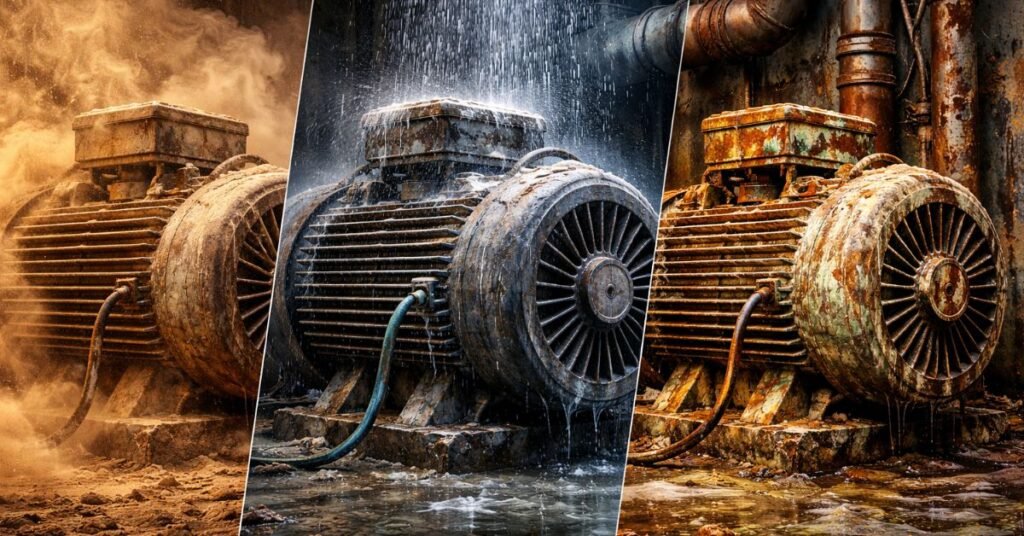
You will encounter a few environmental stressors that most directly shorten motor life: thermal cycling and heat, moisture and humidity, airborne particles and contaminants, and corrosive gases or salts. Each factor attacks specific motor components—windings, bearings, insulation, housings—and requires targeted mitigation.
Temperature Extremes
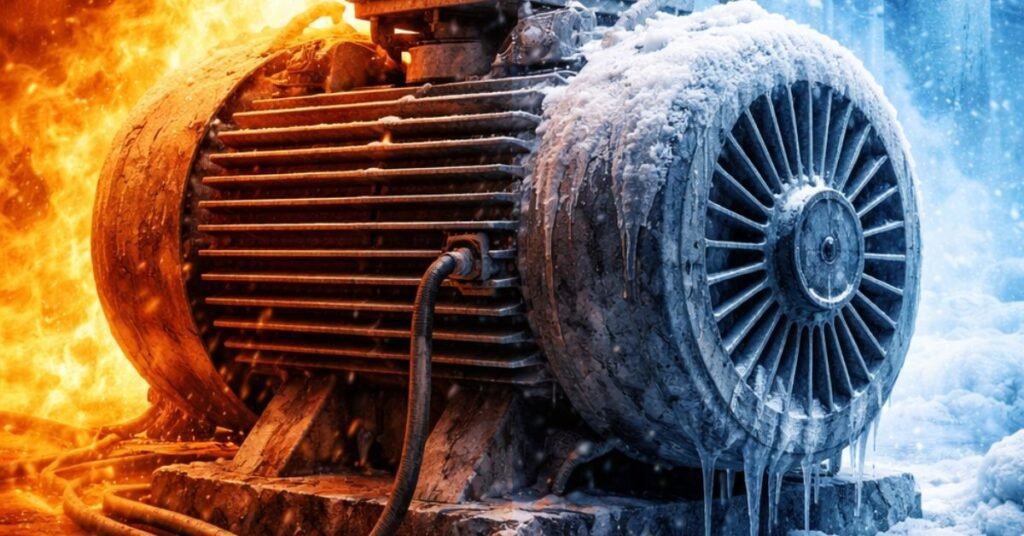
High ambient temperatures raise winding and bearing temperatures, accelerating insulation aging and reducing dielectric strength. For every 10°C rise above rated temperature, insulation life typically halves; this makes managing heat rise critical in continuous-duty applications. You should monitor winding temperature with RTDs or thermistors and control duty cycle or ventilation when temperatures approach limits.
Low temperatures increase lubricant viscosity and can embrittle insulation and varnish, causing startup torque issues and mechanical stress. Thermal cycling—frequent swings between hot and cold—creates differential expansion that loosens fits and damages seals. Specify temperature-rated insulation classes and low-temperature lubricants when motors operate in extremes.
Presence of Dust and Contaminants
Dust, lint, and abrasive particles accumulate on windings and cooling fins, reducing heat transfer and raising operating temperature. Conductive dust (carbon, metal) can create leakage paths across windings and slip rings. You should schedule cleaning, install filtration on cooling air inlets, and choose sealed or pressurized enclosures when particulate loads are significant.
Abrasive contaminants accelerate bearing wear and rotor surface erosion. Sticky or oily deposits trap grit and impede ventilation. For dust-prone sites, use labyrinth seals, positive-pressure purging, or totally enclosed fan-cooled (TEFC) designs to limit ingress and extend service intervals.
Corrosive Atmospheres
Acidic gases (sulfur compounds), chloride-rich marine air, and industrial chemicals attack metal surfaces, bearings, and electrical contacts. Corrosion increases electrical resistance at terminals and degrades rotor and stator components, producing unexpected failures. You must select corrosion-resistant materials (stainless fasteners, coated laminations) and protective coatings for exposed surfaces.
Chemical attack also deteriorates insulation varnishes and rubber seals, leading to moisture ingress and insulation breakdown. Implement cathodic protection where appropriate, and schedule more frequent inspections and preventive replacement of vulnerable parts in aggressive atmospheres.
Conclusion
The work environment plays a decisive role in how quickly electric motors wear and how reliably they perform over time. Temperature extremes, moisture, dust, and corrosive atmospheres directly accelerate insulation aging, bearing degradation, and mechanical stress, turning environmental exposure into one of the primary drivers of premature motor failure. Understanding how these factors interact with load conditions, installation quality, and maintenance practices allows you to predict risks instead of reacting to breakdowns.
By controlling ambient conditions, selecting the correct enclosure ratings, ensuring proper ventilation, and addressing contamination and humidity proactively, you can significantly slow wear and tear. Routine monitoring of temperature, vibration, insulation resistance, and current draw helps detect environmental damage early, when corrective action is still cost-effective. Small adjustments—such as improved sealing, better filtration, or upgraded insulation systems—often deliver substantial gains in reliability and service life.
Ultimately, extending electric motor lifespan is not only about the motor itself but about the environment it operates in every day. When environmental risks are identified and mitigated through smart design, proper installation, and disciplined maintenance, motors run more efficiently, failures become predictable rather than sudden, and operational costs decrease. A well-managed work environment is therefore one of the most powerful tools for improving motor performance and long-term reliability.
FAQ – How the Work Environment Influences Electric Motor Wear and Tear (U.S. English)
1. How does the work environment affect the lifespan of an electric motor?
The work environment directly impacts insulation life, bearing condition, and thermal performance. Heat, moisture, dust, and corrosive substances accelerate wear and significantly shorten motor lifespan.
2. Why is high temperature so damaging to electric motors?
Excessive heat accelerates insulation aging and bearing degradation. As a general rule, every 10°C increase above the rated temperature can cut insulation life in half.
3. How does moisture or humidity damage electric motors?
Moisture reduces insulation resistance, promotes corrosion, and can cause electrical tracking or short circuits. Condensation inside the motor is a common cause of unexpected failures.
4. Can dust and airborne particles really cause motor failure?
Yes. Dust blocks cooling paths, increases operating temperature, contaminates bearings, and—if conductive—can create electrical leakage paths that lead to winding failures.
5. What types of environments are considered corrosive for electric motors?
Environments with salt air, sulfur gases, chemical vapors, or industrial pollutants are corrosive. These conditions attack metal components, electrical contacts, insulation, and seals.
6. How does poor ventilation contribute to motor wear?
Poor ventilation prevents proper heat dissipation, causing higher internal temperatures. Sustained overheating accelerates insulation breakdown and reduces bearing lubrication life.
7. What motor protections help reduce environmental damage?
Proper enclosure ratings (NEMA or IP), sealed bearings, corrosion-resistant coatings, space heaters, filtration systems, and correct mounting all help protect motors from environmental stress.
8. How can early signs of environmental damage be detected?
Rising temperatures, increased vibration, abnormal noise, higher current draw, and declining insulation resistance are early indicators that environmental conditions are affecting the motor.
9. Are sealed motors always the best choice for harsh environments?
Not always. While sealed motors reduce contamination, they may retain heat. The best choice balances enclosure protection with effective cooling for the specific application.
10. How can companies reduce environmental wear on electric motors long-term?
By improving installation practices, controlling ambient conditions, using proper enclosures, performing regular inspections, and monitoring motor condition trends over time.
See also: Causes Of Excessive Wear And Tear Of Mechanical Parts.